Browsed by
Author: Jarrah Gleadell

Stay alive: don’t text and drive.

Stay alive: don’t text and drive.

What were the biggest things I learned at the RACbstreetsmart excursion?

The bstreesmart excursion really hit home for me – especially the crash enactment. Showing that not even the advanced medicine we have now can always save you is a particularly frightening thought; one bad decision could affect the rest of your life, or straight up cut it short. The enactment made it more than just stats for me, now it feels real, not like something that could happen to someone else.

What one piece of advice would I give to young drivers above all else? Why?

Don’t crash. Before you say ‘Wow, that’s about the least generic advice I’ve ever heard’, hear me out. If I said don’t get distracted while driving, or don’t drink drive, that would be a lie. Above all else, don’t crash. All the other things are just part of the problem – you need to think about the whole picture in order to have a safe experience. Crashing is the cause of 100% of all car-related injuries on the road, so why not minimize that? Why focus on just one thing when you could do it all? And yes, it’s not helpful in actually telling you how not to crash, but whatever I tell you isn’t going to the be-all and end-all. Do some research, figure out how to be safe on the roads, and don’t crash.

My driver’s pledge:

As a beginner driver, my driver’s pledge is a set of important things for me to stick to when behind the wheel. This includes what I will, and won’t, do.

I will: stay focused on the task at hand (the road), keep my surroundings free of distractions (the passengers, mobile devices, etc.) and stay beneath the speed limit at all times.

I won’t: drink and drive, text or other activity while driving, drive while tired or in dangerous conditions, and once again, above all else, crash.

2024 Y10 Health – Jarrah Gleadell.
Towers: an engineering journey

Towers: an engineering journey

For the last project in Science this year; a spaghetti tower. A common school sight, these towers were surprisingly difficult to design. We were tasked with creating a tower at least 60 cm tall, with a base of 30cm * 30cm maximum. The top of the tower had to be 5cm * 5cm, able to fit a piece of paper. Then, they had to be earthquake resistant. For this assessment, we were given $60, with one spaghetti stick costing $1, and one gram of blu-tack costing the same.

The process of designing these towers was one filled with challenges; from how to actually stick spaghetti together with blu-tack to how to stop the tower tipping over completely. We went with a triangular design in the end, with rotating equilaterals going up to the 60cm mark. We then added more rotated triangles on the bottom layer to give it more weight, stopping it from tipping over. In the end, our tower was substantially more stable than I thought was achievable, and was practically immune to the shaking table.

As this was a group project, well, we were in groups. For me, I went with Kevin T. and Sau Yu C. We worked efficiently and were organised between us; with each of us filling out our roles. Sau was the reporter: an important role, keeping the project on track to be finished by the time needed. He also did some testing at home, speeding along our prototype. I was our project manager and speaker, organising what each person needed to do and overseeing the design, as well as asking for help when needed. Kevin was the equipment manager; making sure we didn’t go over budget and keeping our project realistic.

Overall, this was a great project, and while it may seem daunting with a $60 budget, it’s easier than it sounds.

A Year 9 Achievement

A Year 9 Achievement

An achievement this year? When I was starting a plan for this, I couldn’t think of anything in specific. While I’m not doing badly this year, I don’t feel like I’m standing out. Though this is about school and learning, it shouldn’t just be about academic achievement and the like. So the achievement I’ll document will be learning to really listen and trying to learn.

In the past, my grades were fine; I was doing OK. The problem in school for me was that I didn’t really listen or try to learn as much as I could. I was content to sit on where I was at, not pushing for anything better. This year, thanks to some pushing from parents and teachers alike, I’ve adapted a different mindset towards learning and school. I feel like this is an achievement; I shouldn’t just treat school like a means to an end – it’s about learning, not results.

People say good things take time, and this one certainly did. It’s taken me almost a whole year to fully adapt to learning more effectively, and it was quite on and off (especially at the start). Over the time, important people in my life have helped (if unknowingly) me progress with this achievement and without them, I don’t think I would’ve done it myself. These people would be my parents, my teachers and even some of my friends. For this accomplishment, there was no set path, no set process. It was more like writing – starting was the hardest part, and from there, you have a certain flow to what you’re doing.

I feel a lot better when trying to learn and listen. Before, it felt like school was an enemy; an obstacle standing in my way. Now it’s more of an old friend; a helping hand. And, as a bonus, my grades have been improving over the year as well. Overall, there were definitely challenges, but the outcome was worth it. From here, I’ll try to improve my attitude to study (it’s still not my favourite) and improve my collaboration skills. But for now, I’m happy with what I’ve achieved in Year 9.

Health Expo

Health Expo

The Health Expo was a great experience for development and peer connection. We were tasked with creating a stall to help with wellbeing in teenagers. We were in groups of two. I was in a group with Samuel Arnold, with our topic being stress and how to manage it. We were given two weeks to research our chosen topic, with the goal of presenting to other Year 9s at the end of the term.

What were the biggest things you learnt while completing this task?

 I learnt how to collaborate more effectively in a group, but mostly I learned how incredibly effective meditation actually is on stress (and a whole bunch of other stuff). People are always talking about it, ‘meditation this’ and ‘meditation that’, but I never really realised how much of that was true. Collaboratively, I was working with Sam Arnold, who I’ve done a few projects with in the past. Despite this, the Health Expo was quite different, as we only had around two weeks to prepare. Our presentation may not have been the greatest of all time (probably due to the harsh time frame I mentioned before), but it was still a great learning experience for both me and my partner. I honed my visual design and research skills, and now feel a little more confident in presenting to peers. But, overall, the meditation is probably more impactful. I guess the main thing I’m taking away from this task is that I should start meditating.

What one piece of advice would you pass on to young people with regards to wellbeing above all else? Why?

Don’t take things too seriously, and take breaks. Sometimes you can get lost in thinking about how important something might be, but often there’s no real lasting consequences. If you remember to take breaks, this can also help massively reduce the stress of the task you are doing.

Write down a pledge that you will commit to in regards to your own wellbeing. Why did you pick these things to commit to? How will you stick to these commitments?

When I get stressed, whether it be due to school or other factors, I will take some time off what I normally do just to sit and think and meditate. I picked these things to commit to because it’s something related to my group’s presentation and I think it will really help to make a difference.

Overall, the Health Expo was a great experience for us Year 9’s, and it helped us learn many important things such as meditation (this is just specific to our group mostly), collaboration and having fun!

$20 Boss

$20 Boss

$20 Boss was a great experience for me, and I’m going to explain the process my group and I went through to get our product ready for the market. At the start, our idea was Pokemon Lasercut keychains. We started with pixel art, and then decided on normal lines. This was a big game-changing choice, allowing for a lot more time to be used for other parts of the project.

We then decided to create some surveys for customer review, which then led to more time wasted than work being done. This was one of largest time wasters, in turn one of our largest problems. We spent most of Term 3 doing things that ended up not being useful in the end.

By Term 4, we had a new idea that we thought would bring in the money: lasercut Uno Reverse cards. These were a great idea, but by the time this had come into our heads it was too late to make many. And here’s our biggest problem we had to overcome: lasercutting. Since so many other groups wanted to lasercut, we had to time and produce effectively. We didn’t do this. So, with one week to go, we had to mass produce as fast as possible, leading to us having only 3 Uno reverse cards.

Overall, this was a reflection of our problems in producing our products and how we overcame them.

Health Alcohol Assessment

Health Alcohol Assessment

Health Alcohol Assessment

What were the main things I learned during this assessment

Some of the biggest things I learnt personally were how to manage time more effectively, and how to organise the group’s ideas and compromise to come up with something we are all happy with. I learnt to manage time through my group’s disorganisation, and since we were largely unprepared with a week until the presentation, I took control and gave people jobs and decided how we would do our presentation properly. I believe that this helped me as a person to understand time management a lot better, and think this will greatly help me in the future.

What is one piece of advice you would give to teenagers above all else? Why?

If you have the chance to drink, don’t. If you can avoid drinking as long as possible, it greatly decreases your risk of self-injury, embarrassment or other consequences.

I believe this is very important advice, and something I will try to stick to myself. The wide range of consequences from alcohol and the mitigation techniques can be completely avoided if you avoid alcohol itself.

Write down a pledge that you will commit to if you start drinking alcohol.

If I decide to drink alcohol, I will be responsible. I will always make sure there is someone I can rely on who is sober if I decide to drink, and I will make sure to drink low quantities. I will drink only in a safe environment, such as my home. I won’t take part in drinking competitions or the like, and I will avoid being pressured into drinking.

Why did I pick these things to commit to?

I chose these, as these are the main points that I feel reduce the risk of drinking. If there is someone nearby that I know will help me if I get drunk, I feel like this will reduce risks by a large amount. This also ties in with drinking in a safe area, as that way it’s almost certain someone I trust will be there. Being pressured into drinking is a large reason many people drink, although in the past peer pressure does not seem to affect me as much as others, and I will remember this and try not to be pressured into doing the wrong thing.

How will I stick to these commitments?

Well, I probably won’t drink. But just in case, I will remind my family/friends who will be with me at the time to help me stick to these commitments. I will also avoid brining alcohol to parties etc. as this will almost certainly encourage me to drink. I will avoid being around people (especially if they’re drunk) who I know will try to get me to drink, and I will avoid entering situations that will encourage me to drink.

Reflection

Overall, I think that this assessment taught me a lot about alcohol and it’s effects. I now believe that alcohol should be avoided where possible, and if not possible to drink in small quantities. Since it’s consequences can be so impactful on people’s lives, evasion is the best method of mitigation. This assessment has taught me skills as well, for example how to lead a group into effective work, and also how to spend an hour making cardboard tubes and then leaving them at home on the day of the assessment. This assessment was an insight for me, into how bad alcohol actually is. Previously I had not realized how dangerous it could be, since it is common tradition to drink at parties or the like. this has helped me to understand why many people choose not to drink, and I believe I will be one of those people.

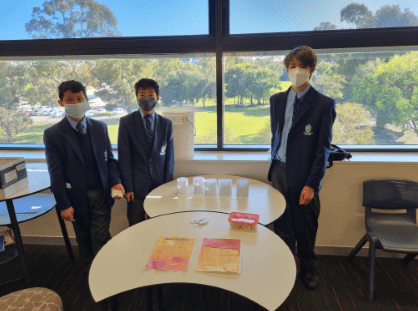
Me presenting our work on the presentation day (not like it really mattered, since everyone was playing Mario Kart)

Semester 1 InnovatEd Reflection 2022

Semester 1 InnovatEd Reflection 2022

This semester, I have been doing an InnovatEd course all about the school’s chickens. At the start of term 1, we were told that we could choose to do any project we could think of that was related to the chickens. Originally, I was going to make a video game about caring for chickens, although I changed my plan a bit of the way through. I ended up joining the building team, which was a project about building a chicken run. It was a little slow, as most weeks we had someone away, but overall we got most of the plans done by when needed, if only a week or two late. We started building by around week four of term 2, and although from there we made progress rapidly, we still did not quite fit it in on time. This process has been quite interesting for me, throughout Term 1 and most of Term 2, most of my group have just been walking around talking to other groups etc. I found that this meant more of the work fell onto my shoulders, especially during the last few weeks of Term 2. I feel that this InnovatEd subject could have done with a little more of a guideline, as I felt that it was left a bit too open with the project choices. This experience has been great for me, as I have been able to hone my skills such as carpentry, planning in general, and a little bit of leadership. This has also been great for me to practice managing money (in a way), as my group had to order materials for this chicken run, we had to find the right materials, but also the cheapest. I spent a few weeks on this, so I feel I definitely improved my skills in that department. Overall, this project has been fun and interesting, as well as the fact that it is a completely new front for InnovatEd (meaning I was one of the first people to do it). This project was different to anything I’ve done in InnovatEd before, therefore it was a new and fun experience for me 🙂

Letter to a MP

Letter to a MP

Why I chose this issue:

I feel that this is an issue that directly relates to me and my peers, and it also has a lot of weight. Here is the letter:

The letter:

13 May 2022

Mr Josh Wilson MP

PO Box 1224

Fremantle, WA, 6160

Dear Mr Josh Wilson MP,

I am writing this letter to ask you to implement a limit to the amount of homework given to students.

I am a resident of Western Australia, and I am very concerned about the negative impact of too much homework on students.

This pressure of homework can be detrimental to students in multiple ways:

Large amounts of homework can increase stress levels. This has been proven to cause students to get worse grades than before if homework levels are consistently above 80-90 minutes per day. This defeats the whole purpose of homework.

Too much homework also can negatively affect family time, as there is just not enough time to have fun with family. Family is one of the most important things in a student’s life, as strong family bonds help to build great self-esteem, confidence and teaches vital social skills. Instead of spending their time after school with their family, students are forced to do their homework every afternoon. This is the major factor decreasing the quality of family life.

Students are staying up all night to do homework, yet nothing is being said. Even if homework is used sparingly, there are two more points I would like to cover:

First, why is homework even necessary? How is it that students are at school for seven hours a day and still not learning enough that they must do hours of homework when they get home? If enough cannot be taught in seven hours, this is an incredibly inefficient system.

Second, teachers often believe that they are the only teacher giving homework to the student in question. This can stack up, often with students ending up with ten to twenty minutes of homework per subject. Six subjects a day can lead to a total of over two hours per day. Teachers have also been proven to underestimate the amount of homework given by up to 50%. Stating the obvious, this exceeds the eighty-minute stress mark by a large amount.

Once again, I ask you to consider putting a Homework Limit Law in place, as this issue affects the whole future generation, and those yet to come.

Yours sincerely,

Jarrah Gleadell.

Sleek Geeks Science Video

Sleek Geeks Science Video

Assistance received:

The school’s audio recording hardware.

Our film is about rising ocean levels, and how this affects people. This relates to the 2022 theme of change by relaying how as the Earth warms it slowly melts ice, causing higher sea levels. The higher sea levels are the change we focus on in our video.

We found most of our information on online articles, like nationalgeographic.com, or wikipedia.com. Also, over time I have come to possess knowledge on this topic through watching documentaries, watching YouTube videos, and reading.

  1. What is the project you have been working on?  What are the success criteria for the competition (i.e. how will your video be assessed)?  You may like to include a link to your video at this point (you can upload your video to Microsoft Stream).

We have been working on a video production in groups of 4, about scientific change in any form. Our topic was rising ocean levels.

  • How did you organise your group? Did each person have specific roles? Did each person have the opportunity to contribute their ideas?  How would you improve your work in this aspect if you had another opportunity to repeat the project?

Each person had a role, for instance: editor. Ryan mainly took charge for most of the project, I did the script. If I did this project again, the main change would be that I would choose a different group.

  • Did your group have any disagreements? What strategies did you use to resolve these conflicts? How would you improve your work in this aspect if you had another opportunity to repeat the project?

A few, to do with focusing and doing work. Not specifying any members of our group, but this was an argument we had.

  • How did your group manage your time? Did you finish the project on time? How would you improve your work in this aspect if you had another opportunity to repeat the project?

Our time was a little stretched, but in the end we finished on time, due to the efforts of some of my group members (also not naming names here). If I did this project again I would try to get everyone on the same page ASAP.

Health Assessment T1 2022 Values & Role Models

Health Assessment T1 2022 Values & Role Models

TASK 1:

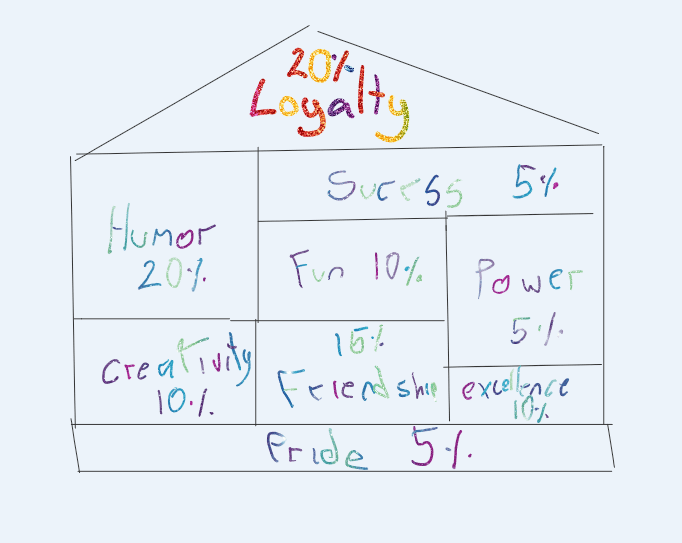
HOUSE OF VALUES

a house :D
My House Of Values

My 3 Core Values

#1: Loyalty

My first core value is Loyalty, as I will always keep my promises, and I would hope that my friends would too. I also believe that loyalty can help build trust and understanding between people. I think that loyalty is very important in my everyday life, helping me keep my friendships active. Loyalty affects my life in the following ways: If there is specific information that someone has asked me to keep secret, I would not tell anyone even if it got me in trouble. I (do) always keep promises unless something physically stops me from doing so. I think this can affect my decisions, as if I am loyal to someone (my friends, for example), I would help them over others etc.

#2: Humour

Second, I have humour as a core value. Humour is very important to me, as without it we would spend our days moping around with little happiness (exaggeration alert). I believe that humour can help people rise out of bad times in their life, even if not much, and that it will always brighten someone’s day. Some people might say that humour is what I try to do (and fail) at, and others might say that it is what I do best. I think that humour affects me in quite a few ways, including how I act around people and how I interact with people. I always share any funny stuff that I came across/happened to me.

#3: Friendship

My third, and last, core value is friendship. Friends are great people who can help you through difficult times, and even just be fun to hang around with. Friendship is a massive influencer on my life, similar to peer pressure in ways. Friendship is not only one way though, so you should always be a great friend to your friends just as much they are to you. I always help friends, even if it puts me out of my way to do so. I think that friends are some of my most important people in my life, as they help me (occasionally), and I help them (much more often). This value can affect my interactions with others (quite a lot), as friends I will talk openly with, and share. With people outside my friendship group I can be rather shy.

TASK 2:

ROLE MODELS

.

.

What behaviours does this person demonstrate to show that they are healthy?

.

What do they look like? Are they healthy? How do you know?

.

.

What message does this person promote? Why is it inspiring and healthy?

.

.

.

Why should young people look up to this person as a role model?

.

.

.

Thinking back to your House of Values activity, what values does this person demonstrate?

GOOD ROLE MODEL: DAVID ATTENBOROUGH

They try to educate people on the importance of nature, to protect and conserve.

A lot of David’s good attributes are behavioural, so his appearance is not very relative. At the age of ninety five, he is a little on the old side, but this does not stop him from teaching the world on television. He is most likely healthy as he has managed to stay alive so far, and managing to still run documentaries at his age.

His message (or my interpretation of what his message is) is to help us (as a species) to understand nature, and in doing so, motivate us to take action on preservation of nature.

As a role-model, David Attenborough is a great one for young people for the following reasons:

  1. He is an activist on protecting nature, and keeping the planet healthy for years to come.
  2. He helps people understand the majesty and benefits of nature.

Stewardship, learning, connection (I think)

BAD ROLE MODEL: DONALD TRUMP

They encourage(d) people to take action against the legal system for bad reasons, made bad decisions for people etc.

They do not specifically look unhealthy, they are mainly more behaviourally unhealthy. I do not know, I am going on what the media has said.

I believe that Donald believes he is doing the right thing, although not many people outside America agree. In general, he just makes bad decisions for people that end up in (usually) people getting hurt. As a leader, this is not a great trait.

No, as he represents bad motives as a leader already, so as a role model I would most likely believe that he would display bad morals etc. in front of young people, making him a ‘bad’ role model.

No. All the things I have stated here are from the media, internet etc. For all we know, Donald Trump is not even a real person. The media can be twisted, or completely changed from the actual events/incidents. Over time and space, the media can be changed from person to person until it does not even resemble something like the original story. This can be a big problem for people, believing fake news, and causing them to take action (sometimes) on faulty information. This could lead to catastrophes for the person in question, ranging from financial to mental stability. Overall, the media should not be believed unless multiple sources can back up the story, as this way there is less likelihood that someone made up the story.

What behaviours does this person demonstrate to show that they are unhealthy?

.

What do they look like? Do they look unhealthy? How do you know?

.

What message does this celebrity promote? Why is it unhealthy?

.

.

Do you think young people should look up to this person as a role model? Why or why not?

.

Is everything you hear, read or see in the media true? Discuss.

In conclusion, this is my Health Assessment from T1 of 2022, as an ePortfolio submission. I hope you all enjoyed reading it!

BIBLIOGRPAHY:

https://en.wikipedia.org/wiki/Donald_Trump

https://time.com/5926883/trump-supporters-storm-capitol/

https://en.wikipedia.org/wiki/David_Attenborough

https://en.wikipedia.org/wiki/David_Attenborough_filmography

https://en.wikipedia.org/wiki/Presidency_of_Donald_Trump

https://www.whitehouse.gov/about-the-white-house/presidents/donald-j-trump/

https://www.britannica.com/biography/David-Attenborough