Browsed by
Author: Jarrah Gleadell

2021 Reflection Life skills

2021 Reflection Life skills

2021. A big year for all of us, with Covid restrictions coming and going. For me, 2021 was my first year of normal school in 4 years, so it took a while to get used to it. This post will cover some of the things I did in 2021 and ‘me reflecting on them’.

One of the first things about 2021 I remember is starting school with a lockdown. We did video calls over Microsoft Teams, and didn’t really get much work done. Aside from that, it was nice to meet my class in week 2. I met a few people who would end up being my friends, and, *cough*, didn’t form a cult based around watermelon. The first few weeks were quite nice, sitting out on the lawn at our own private table at lunch, making friendships during class. And then in week 4 was when I discovered the library.

The library has probably been one of the biggest things for me, as I love reading, but also *cough cough* you definitely not play video games in there during lunch/recess. So for the rest of the year, pretty much, that’s where I spend my breaks. In Term 2, I remember especially, I started a Minecraft SMP (The JAM SMP), and had about 8 players a day (biggest server milestone ever for me). JAM was good, until people started making their own spin-offs, namely the Yogurt SMP and (I’m pretty sure it was called this) the Peanut Butter SMP. By the end of Term 3, people had started to discover emulators and that was the start of a new page in my book. By Term 4, Me and one of my friends decided to race through a video game and see who could finish first, and it took us over 24 hours total (I won, of course). Then we decided to make and play a factions server for Minecraft.

Overall, this is a recount of the main things at school during 2021 that were not related to academics.

A goal I want to complete this year is:

Get 100% on a test.

Christmas Market Reflection

Christmas Market Reflection

This term in school, we were making a product to produce and sell at our All Saint’s Year 7 Christmas Market. This paragraph will cover some of the decisions we made before the market, and during the market.

Pre-Market:

Some of the decisions we made pre-market were the biggest ones, and possibly the worst ones as well. For example, group choice. We were told we could choose a group, but in the end I was in a group of four with Advait Nitin, Cooper O’Malley and Wade Lansley. This was a rather large setback, as it had taken us a whole week and a half to get together, but after all it worked out OK. For our actual product, we had multiple ideas, including gemstone soap and Christmas tree decorations, but we chose bath-bombs shaped like sticks of T.N.T. instead. This was a good product choice, we thought, because of it’s novelty, and because there was a limited amount of this product anywhere, there would be good supply & demand tactics by making this product.

Prototyping. Prototyping was one of our main issues, as the PVC pipe we had chosen was not wide enough for the bath-bombs to hold together after emerging from the tube. We spent much longer than we should have on this part of the process, so I think that we should have tried a larger tube much earlier on.

Product Pricing: We decided on $2.99 for our bath bombs, as that was still three times the cost per unit ($1.09), and we would have been using psychological marketing techniques. Advert: for our advert, we made multiple choices, but mainly we tried to market to boys between the ages of 10 and 14, as they would be our most likely customers.

During Market:

During the market we made many decisions to change our price and sell techniques, including:

We had to drop our price to $1.99, as we had competitors who were selling for less.

We had to make sure people came to our stall by (trying) to make it look festive and happy by waving our arms around and smiling. We also had to keep our heaviest bath bombs on the corners of the tablecloth, as the wind kept blowing it away

Our product

I think one of the most important things I learnt from this is to always be prepared for things not to work out how you think they will.

If I could change some things about how I did this project, this would be them:

First, I would try to get a good group from the start. Also, with the product idea, it would be preferable to have a good one (keeping in mind competitors, ‘affordableness’, demand for that product, etc.) by the first few weeks. Then, I would try to get prototyping done ASAP, as the faster that is done, the faster you can work out kinks in the production process. If we were allowed to choose stall location, I would put us as far away from competitors as possible, so that it seems like we are the only group selling bath bombs. Also, I would try to put as much festivity into the stall, because I think that this would help sales even more than the product itself. For instance: if there was a run-down restaurant and an extremely fancy restaurant, which one would you go to (even if the run down one serves better food)? You would most likely choose the good looking one, as it seems like a better place to eat. This is a variation of premium pricing, except in appearances. With packaging, (if our product needed packaging) I would make sure that we started on that as soon as prototyping is finished. Overall, these are the biggest changes I would make if I was to do the Christmas Market again.

This has been a reflection on the Year 7 Christmas Market Experience from my point of view!

Project X: Media

Project X: Media

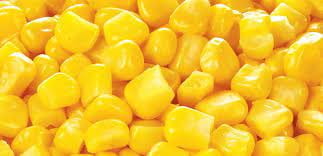
Media: A project on advertising. We made an (video) advert for a product/service, over the first half of the term. We got to decide groups, and I chose to be in a group with Michael BW. We decided to make an advert about Beijing Corn, a very special type of canned corn with lots of *health benefits*, including the 100% real IQ boost. Here is what happened over these few chaotic weeks:

Timeline:

Week 1: Michael and I were planning our storyboard, script and props.

Week 2: We started ‘recording’ but all our footage got corrupted.

Week 3: we did a redo of the recording, this time with corrupted sound.

Week 4: we finally decide that all our recordings are just too corrupted, and that we didn’t have enough time to record again, so we just did an dubover (by we I mean Michael, as we had to do it at home).

Week 5: we finally finished editing, and handed it in.

Beijing Corn
Corn Kernels – Seafood At Home

Product ideas:

Over the course of the first week, Michael and I came up with multiple hilarious ideas for our advert, but in the end we chose Beijing Corn for it’s diversity, originality and creativity. We made up heaps of (fake) benefits for our corn, including the beforementioned IQ boost. We also decided that Beijing Corn would be an easy product to advertise, as it had not been seen before.

Recording:

Recording. Our biggest challenge, and what made our ad not so great. All our recording attempts were corrupted in some form or another, from actual video, to sound, to video AND sound, so in the end we decided on a different solution. We would record the video, then put a voiceover. The only problem was, we could not do it at the same time, as we had run out of class time. This led to Michael doing the voiceover by himself, and it didn’t quite fit in time with the video.

Panasonic Video Camera HC-W585 | Officeworks

Conclusion:

In the end, our advert was not of top quality, as we had a few major setbacks in recording. This article has been a reflection on the Term 4 Media Advert assignment for me and my group.

Project Utopia

Project Utopia

Project Utopia

What is Project Utopia?

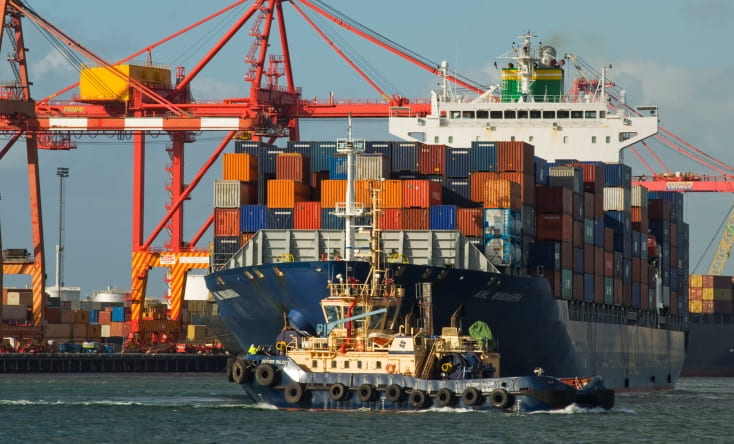
Project Utopia is a large project the whole of the Year 7 cohort was a part of. We were put in groups of four to five (My group was me, Adam Glass, Eva Small and Sienna Scahill), with the goal to make the Fremantle Port a community where all people thrive, and to display our work at a showcase in Week 9. Each group decided on a certain focus for their idea, with all the groups displaying their ideas in at the end of term. Previous year groups had the goal to create a utopia from scratch, whereas this year we are redesigning Fremantle Port. The Fremantle Port used to be, and is still for a short amount of time, a thriving port for all things between overseas shipping and ferries to Rottnest Island. As of recently, though, the decision has been made to shut down the Fremantle Port and transform it into a community. This decision, with the combination of our school choosing to help design the new port, led to Project Utopia.

The Project Logo

Liveability:

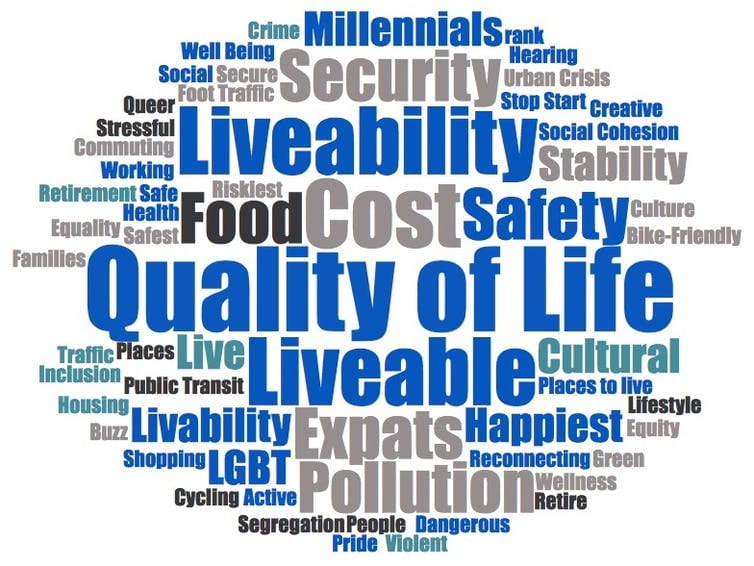
In our project, we were also tasked to connect to certain goals and factors. Some of the factors we included were the liveability factors of infrastructure and the subjective factor of connection to important people in their life. How we connected our project to each factor was different for each one, but they all tied in eventually. For infrastructure, we had a tram rail connecting the port to Fremantle, Fremantle to the port, and connecting different parts of the port together. For connection, we decided that the trams would have a rail going over the river, helping people minimise the time taken to get to Fremantle. This idea was thought up because we thought that the current system  of going all the way around the port to drive over the bridge was very ineffective and slow.

Sustainability:

One of our secondary goals was to make our project as sustainable as possible. How we overcame this challenge was in a few different ways; and underwater tunnel to maximise travel without power, solar panels to power the trams and run excess power to the grid, and to have our trams fully electric. Our underwater tunnel was a late addition to our project, being only thought of in the last few weeks (personally it’s my favourite thing out of what we thought up). The tunnel was a great way to help people understand about the river, but on top of that, it would hopefully reduce the use of non-sustainable transport across the river. With our sustainably powered trams, some initiatives we put in (or tried to put in) to make them more energy efficient included: to make them fully solar powered and to make the tram rail in a shape that used the least energy to travel around (etc. No loops). How we did the solar panels; we decided to make more ‘modern’ tram stops, for a more enjoyable experience, and we would put solar panels on top of the roof. We also put solar panels on car park shades that would be all around the entrance to the port so that people would not use their cars inside the port area.

Global Goals:

As the goals part of the previous ‘Goals and factors’ I talked about, the Global Goals come in. The Global Goals are a set of seventeen milestone achievements that were thought up by the United Nations to be achieved by 2030. The Goals we aimed to help complete were: Infrastructure, Clean and Affordable Energy and Climate Action. Infrastructure is very similar to the liveability factor of infrastructure, so I won’t go into detail here. The Clean and Affordable Energy goal was fairly easy for us to do, as a large part of our project was making our trams and tunnel sustainably powered. With our solar panels, we could provide enough power for the trams and some, so we could afford to give free or cheap power to residents or land owners. Climate Action we achieved by having nearly no carbon footprint from our project.

Collaboration:

Collaboration was also a big part of this project, with it being groupwork. We had to come up with ideas, argue most of our time away deciding who’s idea was best, and than finally incorporating that idea into our final plan, and repeat. Even though this doesn’t sound like good collaboration on the part of me and my group, this was not the only example. For instance, we managed to get work done EVEN when two or three of our group members were away due to sickness, holidays or sport. We actually did most of our script writing during this phase!

My learning:

I think, throughout this whole process, I learnt (or practised) some key things.

  1. Public Speaking: Throughout the Utopia Project, we had to do multiple public speaking parts, including English test speeches, the Showcase, etc. Through these experiences, I believe I greatly increased my public speaking skills, though I still struggle with a script.
  2. Collaboration: I know I talked about this before, so I’ll be brief, but I think I at least ‘mediumly’ increased my collaboration skills through communication outside of school about what to do, and communication in real life to determine who was doing what.

Vision Board:

Our task (aside from researching) was to make a vision board of our idea. For the people who have not encountered these very visual (for want of a better word) pieces of paper or card, vision boards are a large card rectangle with images of the desired outcome/plan. Our vision board was rather rushed, but we got it together in time. Our vision board consisted of a small description of our project, with sections for trams, the tunnel, and power, respectively. A small portion of our vision board actually got duplicated accidentally so we had to fix it really quickly, as the showcase was the week after.

Showcase:

Our whole project, we were planning for the showcase. This showcase was an opportunity to receive questions, and show off our work to some important people who work in City of Fremantle, and parents and display our vision board. Some of the questions, and quick modifications we made included:

  1. Disabled access to the tunnel: Originally we had just planned to have stairs, but one visitor brought up a good point that is should be accessible to disabled people as well, and because the project goal was to make Fremantle Port a community where all people thrive, we thought it would definitely be in our interests to change our tunnel entrance design.
  2. Tunnel placement (on this one we didn’t actually change anything, but I thought it would be good to explain this anyway): One slightly older visitor asked if the place we chose for the tunnel would be the best spot, due to river traffic, river depth etc. We explained that as of after the development, the river would no longer have large ships travelling in and out, and that the depth would be optimal there because it would still let slightly smaller boats through, like the Rottnest Ferry, and private river-moored boats.

This Project was definitely a great project, and there were quite a few fun experiences along the way. I wanted to share some of these experiences, and it will hopefully also help a greater understanding of Project Utopia:

In week one of the Project, we didn’t even do anything on what would turn out to be our sustainable tram system and underwater tunnel. During this week, we were tasked to connect liveability factors to Global Goals, and vice versa. This helped our later speech writing, but at the time I couldn’t figure out why we were doing such an exercise. In week two, we were told the full ‘briefing’, if you like, of the Project. We were told we would be redesigning Fremantle Port into a community where all people thrive, and that we would be making a speech and a vision board (or a physical model, but this idea was scrapped as there was not enough time). After this, we were sent to our groups to brainstorm ideas. Here I am going to skip a few weeks, as there was not too much happening that I can remember. At around week 6-7, we really started to work on the vision board, but not until week 8 did we actually put it together. We even did about a third of the researching for the vision board on week 8! On week 9, we had the showcase which I already talked about, so I am not going into detail here. Some visitors came and asked us about our plan, with multiple questions as well. (By the end of the showcase I think everyone was worn out).

Project Utopia was a really fun project to take part in, and hopefully someday we will get to see our design in the real-life Fremantle Port. It was a great opportunity to get to get to know people as well, with all the different ideas coming together, and it was pretty fun to see what we could make from the combination of ideas. Overall, this was a really interesting and fun project to do, and I hope that our ideas will have an impact on the final decision on the design of Fremantle Port.