
Nishaan Sunner
Project utopia 2022
Capabilities
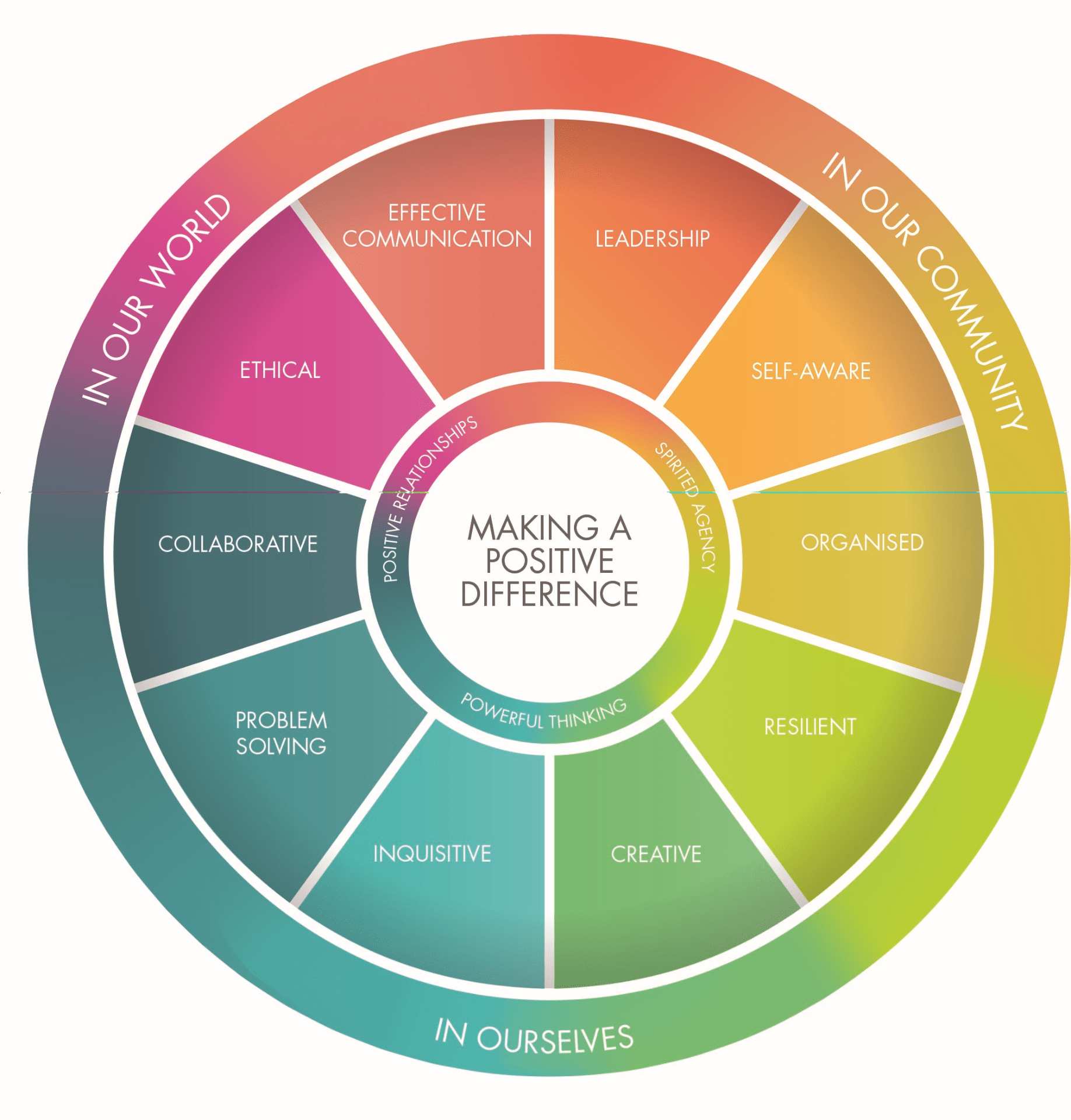
We had to use many different capabilities in Project Utopia. Since it was a group project, we had to use collaboration. We had to listen to our other team member’s contributions, but we also had to give in some of our own input. So, we also had to use effective communication, not just so that we could get our ideas put forward, but also so others could have their ideas listened to. We had to be creative to make our design different to others’, and we had to be organized to stay on track. We had to problem solve when we fell behind in time, and every member in our group had to step up and use leadership at one point in the project.

The Giver
The first part of our Project Utopia was reading the book ‘The Giver’. It explained a ‘Utopian’ place. This made us start thinking about the different aspects of a utopian place and a dystopian place. The book showed a boy who was sick and tired with a dystopian place, and longed to live in a utopian place. Although this book is fiction, unfortunately, many people do live in a dystopian place, even today, and long to live in a utopia. This then led us to our next topic in Humanities: Livability factors.

Livability Factors
In Humanities, we looked at the different livability factors that make up not just the place we live in, but the world. We first looked simply at our street and tried to find the objective and subjective factors in our neighborhood and plotted it on a table. Objective factors are factors that can be measured with numbers, whereas subjective are the more emotional side of livability, and how nice is it to live there, etc. (In economics, we call this material and non-material living factors). We then made a map survey in which we screenshotted an image of our neighborhood in google maps, and then filled in all the infrastructure that is in our neighborhood. We then took a look at livability from a national scale, and then an international scale.

A little Insight into Humanities…
Humanities played a large part in Project Utopia. In Humanities, we learnt about liveablity, and began to ponder on how we could enhance the livability of an area. In Humanities, we also looked at Geography. Geography was necessary as we were created a scaled map of our section of Fremantle.
Livability Factors
In Humanities, we looked into livability factors, and what makes a place livable. We started off on a small scale, we looked at our street. We had to find the objective and subjective livability factors that went into our neighborhood. We then did a map survey which showed all the infrastructure around our house. We began to look at strategies to improve livability, which had a direct connection to our project utopia. We first looked at livability on a local scale, then a national scale, and even an international scale.
Geography
Geography played a major part in Project Utopia. In Geography, we learnt about BOLTSS, which is the way you make a map. BOLTSS is made up of Border, Orientation, Legend, Title, Scale and Source. This was fundamental as we had to create a scaled map of what we were going to do with our Fremantle Port area. We needed to use geography to see how much of the space we were using, and how much would be a reasonable amount to use for both our idea and the land that we were given. We also needed to accomodate to any natural barriers that have been given to us, such as rivers, erosion, etc.


Co-Space

Co-Space 2

Co-Space 3
Our Idea
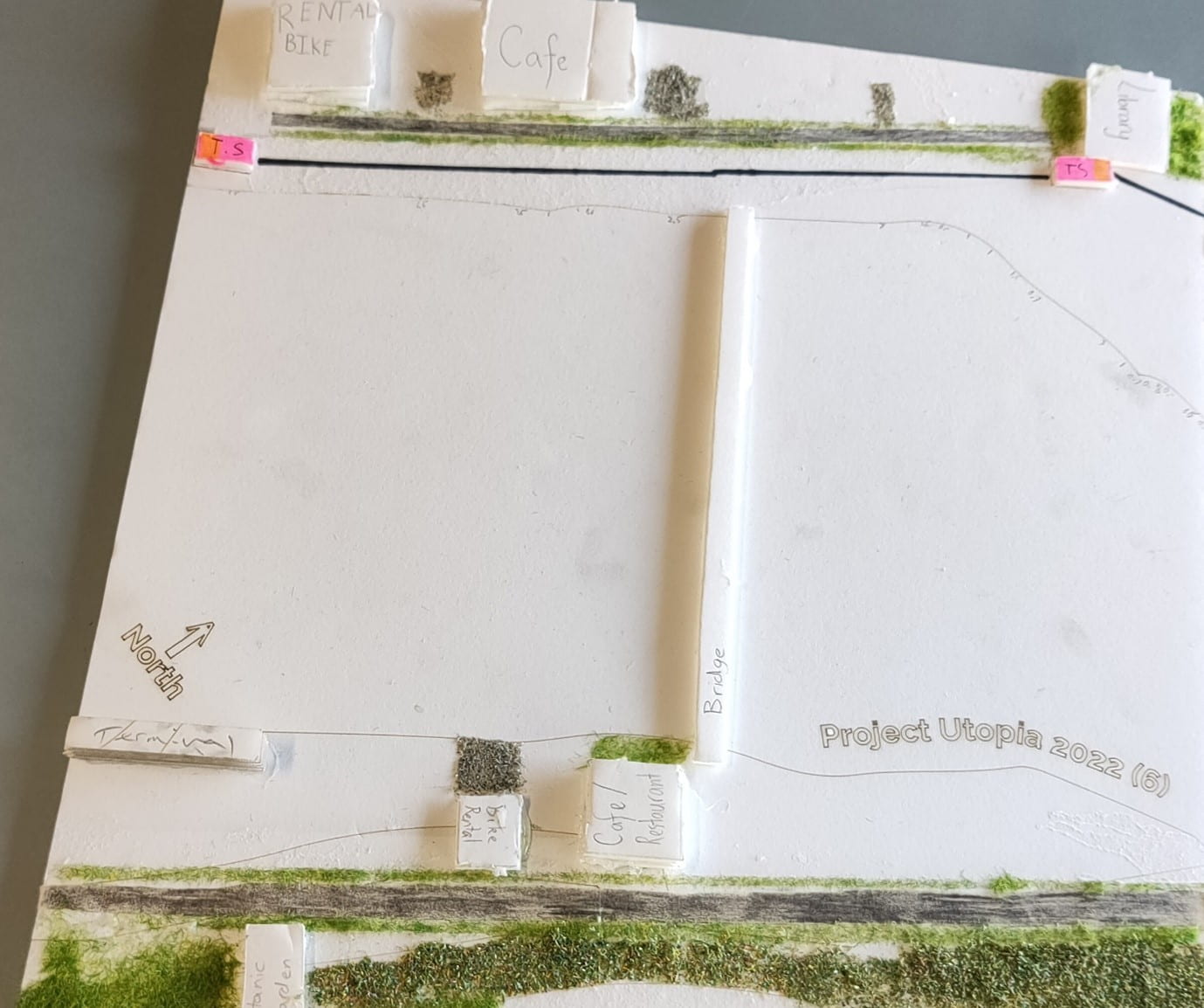
Our idea was to incorporate greenspaces into the reshape of the Fremantle Port area. Greenspaces are firstly good for people. They encourage people to go outside in the sun, and stay healthy. They are also good for mental health and emotional wellbeing. They can be a great space for communities to come together. They provide a space for animals who have lost their natural habitat to stay. They bring us when step closer to stopping the effects of climate change. Below, you can see our map. This was what we had planned to do with our part of the Fremantle Port. You can see a bridge, which is how people can get from one land block to the other, and that is how we have accommodated to the river in the middle. There is a lot of green area, which is grass trees, and we have even included a botanical garden. We have a cafes around the place to enjoy the view. There is also a bike rental area where people can rent bikes to use around the area. Not only is this a way to help people with transport, it is also a good idea to make just a bit of money from our greenspace. We also used co-spaces. Co-spaces is an augment reality app, which we used to show our part of the Fremantle Port. In co-spaces, we showed our map digitally.

Urbanized
In English class, we viewed the documentary ‘Urbanized’, in which we saw both more developed and less developed cities around the world. In this we viewed some of the things that the developed cities have done to make their city livable. For example, the city of Copenhagen, Denmark, has encouraged using bicycles instead of cars to reduce carbon emissions. ‘Urbanized’ also showed what some of the less developed countries are doing to imporove their living standards. An example of this is the city of Santiago, Chile, has a large amount of people living in slums, so they now have a social housing project to reduce the amount of people in slums. This relates to Project Utopia as we are seeing real life examples of improving the livability of an area, and we could take inspiration from some of these actions and implement them in our Project Utopia.
PROJECT UTOPIA PITCH
PROJECT UTOPIA PITCH
PROJECT UTOPIA PITCH
PROJECT UTOPIA PITCH
PROJECT UTOPIA PITCH
PROJECT UTOPIA PITCH
PROJECT UTOPIA PITCH
PROJECT UTOPIA PITCH
To end off our Project Utopia journey, we had a project utopia pitch. We were divided into groups, in which we had to pitch the idea we had for the Fremantle Port Area. We had to make it convincing, and had to make it seem like our idea was the best idea. We practiced tirelessly for weeks, before it was time. We had to say our speech twice, once to get assessed and once in front of our parents. I was anxious to speak in front of my Tutor Group, and we were the last ones. But my group went in front of the class and mustered up the courage to speak. Then, on the next week, our parents visited the school. At the beginning, there was a mix-up, so we only had time for 3 rotations. Firstly, we spoke in front of 3 parents, Raphael’s, Trent’s and mine. In the next rotation, only one parent came to our rotation, and 3 again in the last. However, in the end, all of our hard work had paid off, and Project Utopia was an enjoyable experience.
The Future…
Project Utopia has certainly been a fun experience, and I have learnt a lot from it. The things we learnt in Project Utopia have applied even today and in the future, in all of our learning. Even in Economics, we learn about Living Standards and Material and Non-Material Factors. Project Utopia has given a fundamental basis, which we can then extend our learning from. I would like to say thank you to all of those who helped us in Project Utopia, including Mr. Wong, the guest speakers who came in to our school, Mr. Scotti, and everyone who helped make it possible.

Interesting