
The Mallard Murder

Australia’s legal system is built on a series of rules/regulations called the principles of justice, these principles are designed to ensure all people are treated equally in the courtroom. These are important to ensure that the values on which our legal system runs are always protected. One such law is an independent and impartial judiciary. This principle has two main ‘clauses’ the first is that the legal system must always be independent of the government so that they can never be influenced by parliament. The second ‘clause’ is that the court system must remain impartial to all people on trial, this is done in a variety of ways like; the jury must not know anything about the person’s trial, all parties get the same amount of time to present their case, that both parties must receive the same amount of court resources and that all members of the court system (being judge, lawyers or jury) cannot have any connection to the people on trial. Another principle of justice is the presumption of innocence. Presumption of innocence (commonly associated with the phrase innocent until proven guilty) means exactly what it says, in the eyes of the law everyone is innocent until proven that they committed the crime and therefore must be treated as such. The presumption of innocence is often split into two parts, the law system (court) and law enforcement (police). Law enforcement must presume all suspects innocent, investigate multiple sources, and narrow down suspects rather than presume someone guilty and then prove it. Presumption of innocents in court means that you (the jury) must be sure beyond a reasonable doubt (98% confident) that they are guilty. Another very important principle of justice is the right to high-quality evidence. This means that all evidence must be, factual, true, of high quality and leaves little up to debate. One final principle of justice pertinent to our case is the right to remain silent. This means that any person being interrogated has the right to say nothing under Australian law, this is so you don’t reveal anything incriminating as ‘anything you say can be used against you in a court of law. These principles are the pillars on which our legal system rests and without them, it would be monumentally more difficult to infer justice.

The presumption of innocence is split into two ‘parts’, Law enforcement and court law. Law enforcement must presume all suspects innocent, investigate multiple sources, and narrow down suspects rather than presume someone guilty and then prove it. Presumption of innocents in court means that you (the jury) must be sure beyond a reasonable doubt (98% confident) that they (the accused) are guilty, the Andrew mallard case demonstrates some wild violations of this right. Withholding evidence, police brutality and tampering with evidence. When Pamela Lawrence was killed, police got a witness description of the offender and then amassed a series of suspects based on that. Despite Andrew mallard looking nothing like the description of the offender police honed in on him and proclaimed him a prime suspect despite having no evidence tieing him to the scene of the crime. Police then looked (without avail) for evidence proving that Andrew was guilty, the exact opposite of what police are supposed to do. Conducted several highly unprofessional interviews with Mr Mallard despite him being mentally unfit to be interrogated. These interviews contained alleged beatings and threats from the detectives, extracting confessions to justify their actions. They ended altering witness, (such as the initial murder description) reports fitting Andrews’s description, ‘proving’ his guilt. These examples demonstrate the massive miscarriage of Andrew’s Presumption of Innocence.
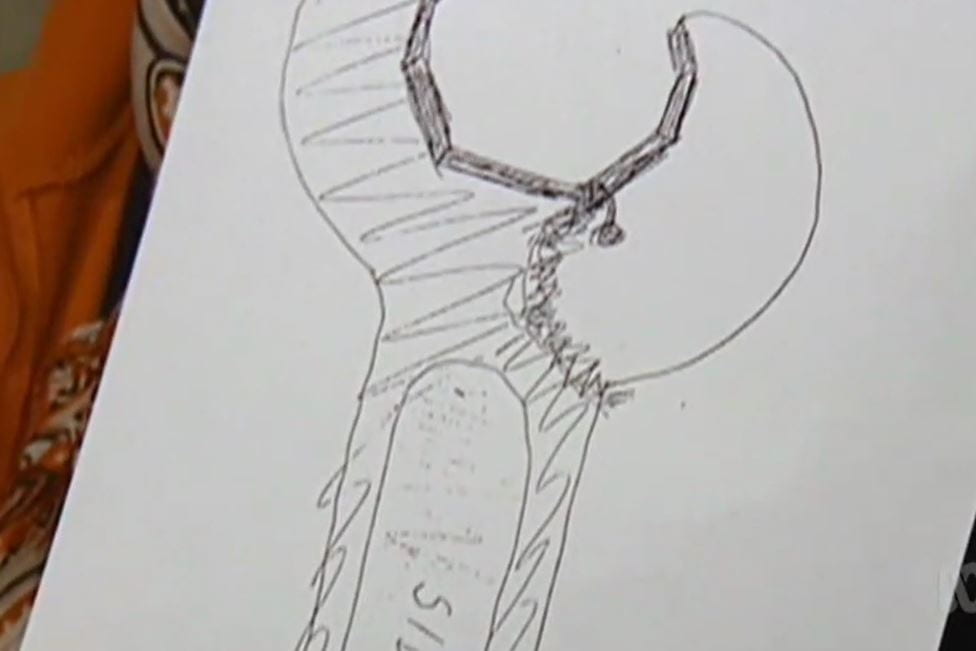
Another element of Andrew mallards case is the principle of ‘High-quality evidence’. Meaning that all evidence must be true, relevant, factual and clear (eg. If you presented evidence of someone being drunk and you just had pictures of them sleeping, you cannot actually infer whether they were under the influence). High-quality evidence is crucial in a court case and police investigation if our evidence needed to be true and high quality, then it would be physically impossible to have a fair trial and unlikely that they would ever get the right culprit on any matter, from speeding to armed robbery. The case of Andrew Mallard is a particularly bad example of this principle as it has no quality evidence at all. The first red flag in the case was his first interview. Andrew at this time had recently been admitted to a physiatric care facility for numerous disorders such as depression and bipolar. Despite him not being in a stable mental state, Andrew was admitted to Interrogation without a nurse or guardian to watch over him. The other times he was interrogated Andrew misunderstood the questions, whilst Andrew was spinning theories on how he thought the killer would have done it, police took this information and attempted to label it as a confession, however, after each theory (much to the detective’s frustration) Andrew would re-iterate that he was not confessing but rather speculating, though, the police did not come out empty-handed. This is because Andrew had told them the 15 things only the killer would know. He identified what Ms Pamela Lawrance was wearing when she was killed, what the doors looked like, which was they swung, the colour and make of a particular car outside the shop at the time from which a witness had seen the murderer and what the murder weapon was (a large sitcom wrench which Andrew had drawn a picture of, after allegedly being stripped and beaten). The only problem with this was that they failed to mention to the jury that the very fact Andrew had known was wrong. Forensics conducted a test of a sitcom wrench on a skull and concluded that there was zero possibility that she was killed with one, still, police kept this information from the jury and made Andrew’s knowledge of the ‘murder weapon’ a key part in the trial. These examples barely scratch the surface of the horrific violation of one of the most basic principles of justice.

The principal’ Right to remain silent was violated in the case of Andrew Mallard. The Right to remain silent is so that you do not reveal anything incriminating about yourself that can be used against you in a court of law. Andrew Mallard at many points during his investigation was given this luxury, whether it is in the form of abuse, or being coerced by officers to reveal information. The first example was the case of Andrew mallard did not uphold this right when we were taken out of Graylands Psychiatric Hospital for questioning. Andrew mallard was in an unstable mental state and not fit to be out in public much less be interrogated. He did not have any medical staff to watch over him during the interview. This inhibition in his mental state might not have allowed making decisions about revealing information or partaking in questioning. This only gets worse later, when on the second occasion he was interviewed police allegedly stripped him naked and beat him until he gave information, not only is this illegal but it is also unethical and appalling police work. The alegged beating happened during an 8-hour (and largely un-recorded) detective interview. It is in this interview where Andrew made most of his ‘confessions’. The police started beating him when he didn’t want to draw a picture of the Sitcrome wrench the police said was the murder weapon. The police’s retaliation to this was to strip Andrew naked and assault him until he decided to draw the wrench. The police had also sent an undercover cop to investigate Andrew, the cop then supplied him with a bong (and possibly cannabis) just barely two days from Andrews’s next interview. Andrew, the police officer and several other bystanders at a club proceeded to get high for the entirety of the night. Though we do not know if Andrew was still impaired from the cannabis at the time of his interview, the possibility of it should have made them reschedule the meeting (or at the very least not have given him a pound of weed right before an interview). The example is the appalling way in which Andrew Mallard was treated by police and how he did not get the get given the right to be silent.
Good work! Make sure you proof-read for spelling and grammar.